
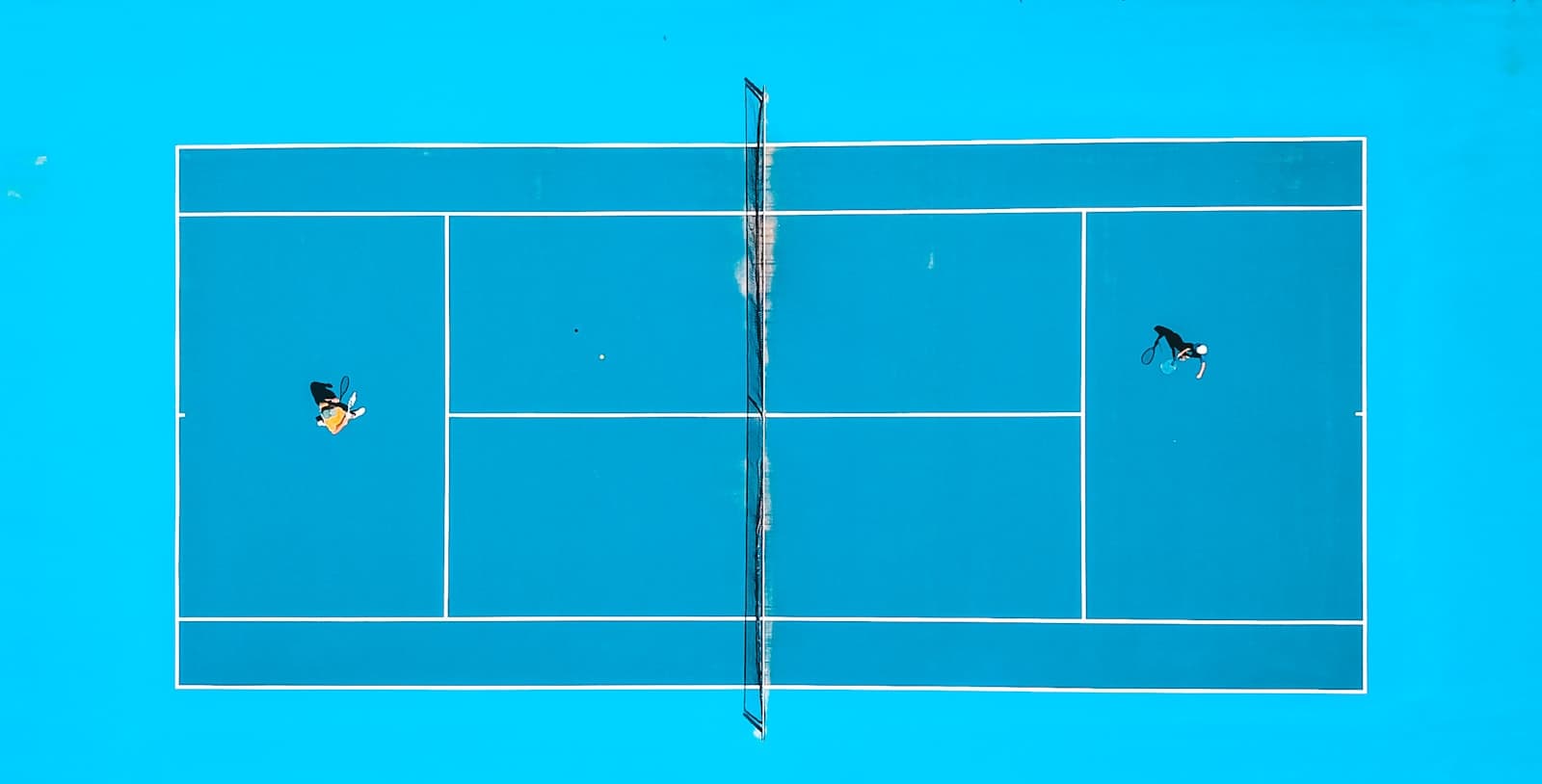
Photo by Lucas Davies on unsplash.com
Tennis Doubles Serving Order Guide: Fix Rotation Mistakes Fast
Tennis Doubles Serving Order Guide: Fix Rotation Mistakes Fast
Serving order mistakes in doubles create arguments, replayed points, and lost momentum. This guide gives a clean system you can use in social matches, leagues, and tournaments.
Core Rule
In doubles, each team has two players. Within a set:
- Team 1 chooses which player serves first for their team
- Team 2 chooses which player serves first for their team
- Service alternates by game between teams
- Players keep the same serving turn order for the whole set
If the order starts as A1, B1, A2, B2, it stays that way until set end.
Receiving Order Rule
Each team also sets a receiving order for each game:
- Partner X receives from deuce side
- Partner Y receives from ad side
You can switch sides at new games, but you cannot switch returners mid-game.
Most Common Rotation Errors
- Wrong server starts after break
- Partners switch return sides during same game
- Team forgets who served first in set
- Returner stands on wrong side at 30-30
These errors usually happen after long games or medical/time breaks.
Pre-Match Setup Card
Use a simple note before first ball:
- Team A first server: ___
- Team B first server: ___
- Team A deuce returner: ___
- Team B deuce returner: ___
Keep this visible courtside to avoid disputes.
Mid-Set Verification Method
At changeovers, ask one question:
"Who serves next game?"
If both teams answer instantly and match the order, you are safe. If not, verify before first serve of next game.
What If You Discover a Rotation Error?
General best practice in non-officiated matches:
- Stop immediately when noticed
- Confirm last correctly played game
- Resume with correct order
- Do not replay completed points unless both teams agree
In sanctioned events, follow tournament official guidance.
Tactical Impact of Correct Order
Serving order is not only a rules issue. It affects tactics:
- Strong server can start set to set tone
- Reliable server can anchor key service game at 4-5 or 5-6
- Better net player can pair with safer serve game
A good order reduces pressure in late-set moments.
Training Drill for Teams
Run this twice each session:
- Play four games only
- Call full score and next server before each game
- Rotate return sides after each two games
This makes order memory automatic under fatigue.
Fast Courtside Checklist
Before every game:
- Correct server?
- Correct return sides?
- Server announces score clearly?
- Partner confirms if unsure?
Ten seconds of confirmation can save ten minutes of argument.
Final Takeaway
Doubles teams that manage order cleanly play with more confidence and fewer interruptions. Set the order once, verify at changeovers, and keep one visible note. Good rotation discipline is a real competitive advantage.